Community Submissions
Looe Darts Team (1930-40's)
- Related mission: Unknown steamer.

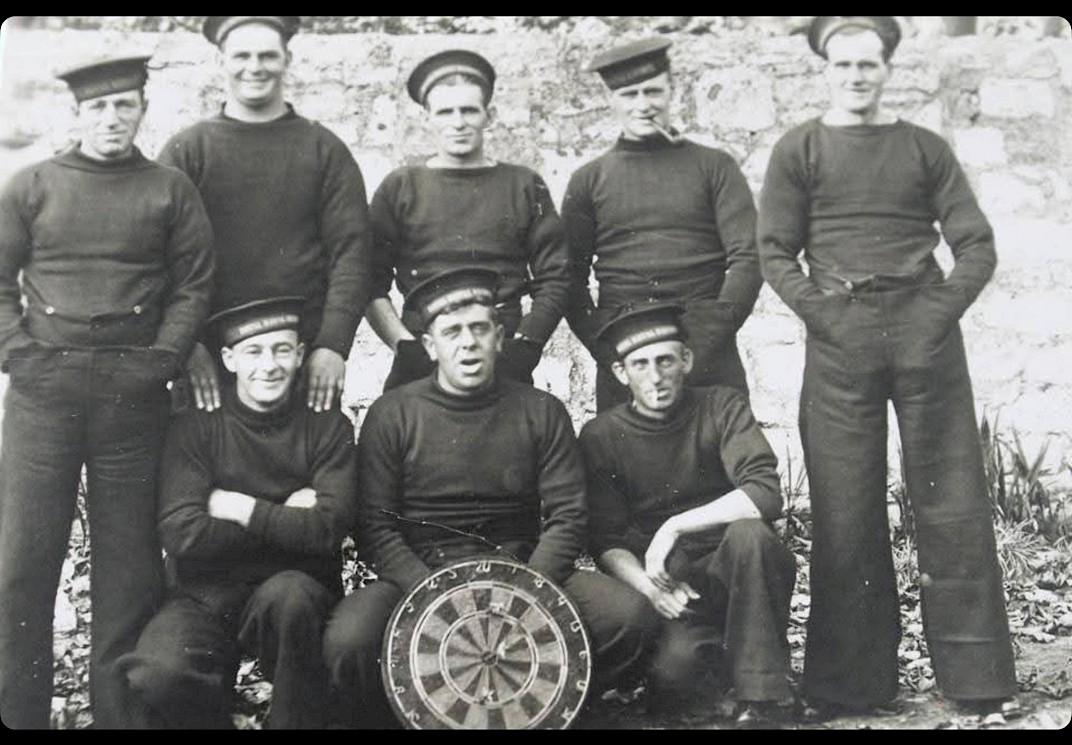
Looe Darts Team, Royal Navy Reserve. From L-R back - Leanard Pearn, Fernley Soady, Charley Pengelly, Charley Butters, Jack Clements. L-R front - Loris Southern, Bill Butters, Richard Pearce.
Bill [William] Butters - Lifeboatman noted in Service Records for Steamer, 1924; Enrolled with RNR 21 May 1925
Charley Butters - Lifeboatman noted in Service Records for Mary Peers, 1923; Enrolled with RNR 22 May 1925
Both are photographed infront of Lifeboat Ryder in 1928 with other crew.
Portrait of Crew outside Lifeboat Station (1928)
- Submitted by The Old Lifeboat Station Archive - Crew identified by Austin Toms (1904-1986), son of Toms, Charles [Charlie] Edward.
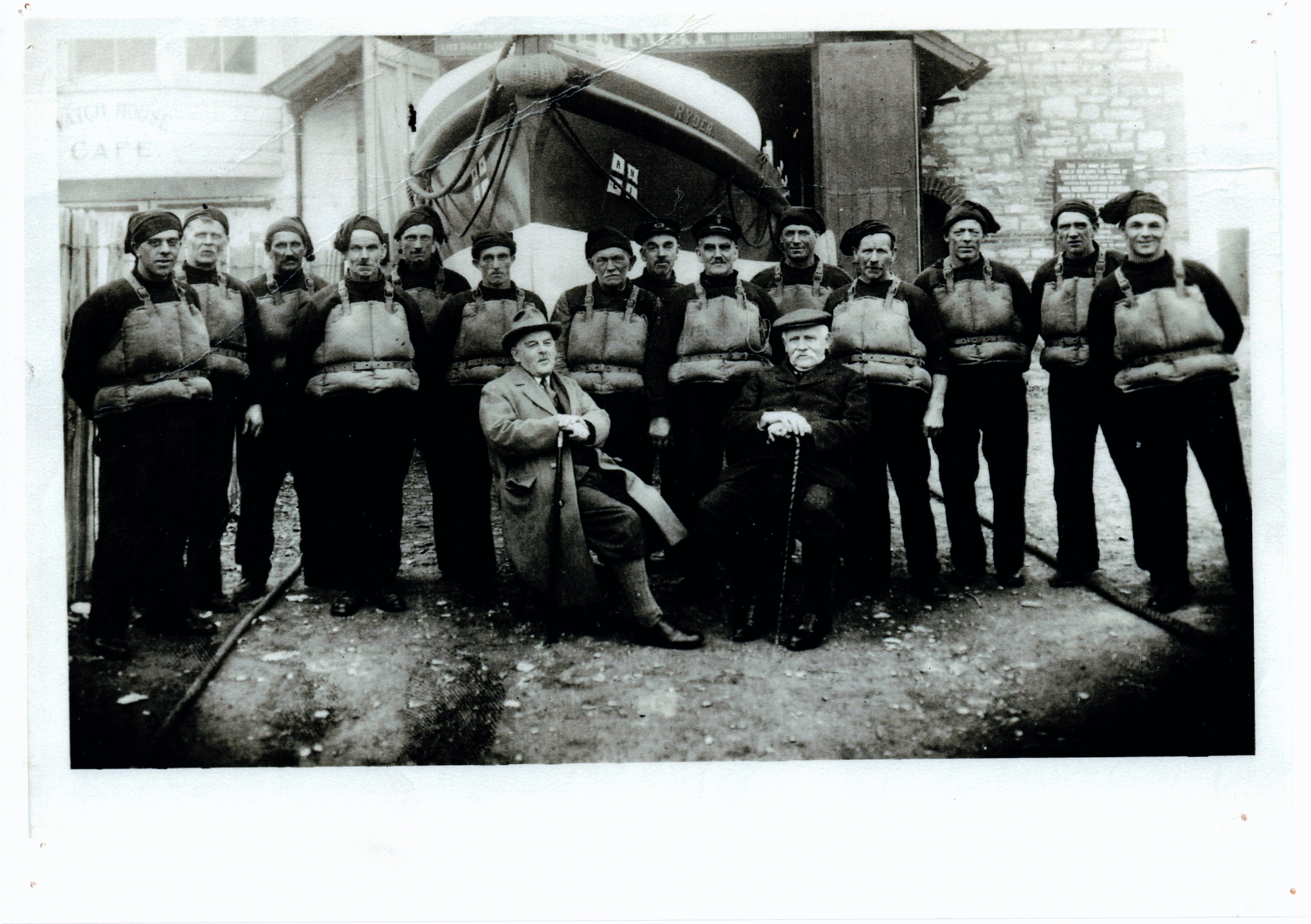
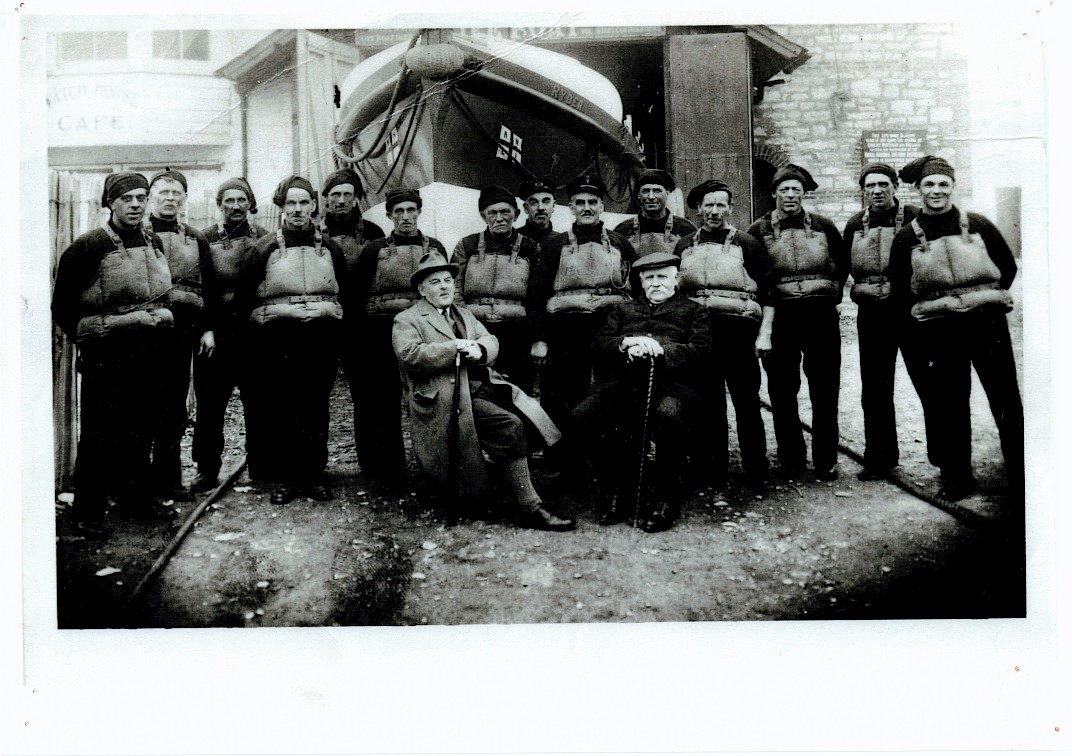
Portrait of Lifeboat Crew outside Lifeboat Station, East Looe, infront of the Ryder Lifeboat. L-R standing: William [Bill] Butters; William [Bill] Cox; Thomas [Tiddy] Cox; Sam Symons; Charlie Hoskin; Alfred Hoskin; Richard Wynhall (Bowman); Charlie Toms (Signalman); Thomas Toms (Coxswain); C. Hocking; H. [Sammy] Symons (2nd Coxswain); George [Shootbob] Soady; Charlie [Shrimpy] Prynn; George [Winker] Soady. L-R sitting: Mr William Frederick Phillips, Commissioner and Mr John Frederick Childs, Honorary Secretary.
"My father, Charles Toms, was signalman to the station for over thirty years. He had to fire the warning gun and recall signal and was responsible for the safe lauching of the boat and for issuing the haulers tickets. He had little brass tokens inscribed RNLI which he handed out, selecting twelve men to assist the relief crew as haulers. There could be as many as a hundred men around the lifeboat house looking and hoping for a token especially during the first quarter of the year. At this time the fishing boats might not have been to sea for weeks and, even if they had, not much fish was caught. So it was a thankless job for my father. No matter who he gave them to, he would be wrong in somebody eyes. In the early twenties, the pay for the haulers was 2s 6d whilst that for crew members was 7s 6d."
'A Brief Story of the Lifeboats in Looe' by Austin Toms - Old Guildhall Museum & Gaol, East Looe.
Six Crab Boats - escorted over Bar (February 13th, 1900)
- Submitted by The Old Lifeboat Station Archive - Boy's Own No.1 - Service Records.
- Related mission: Crab boats.
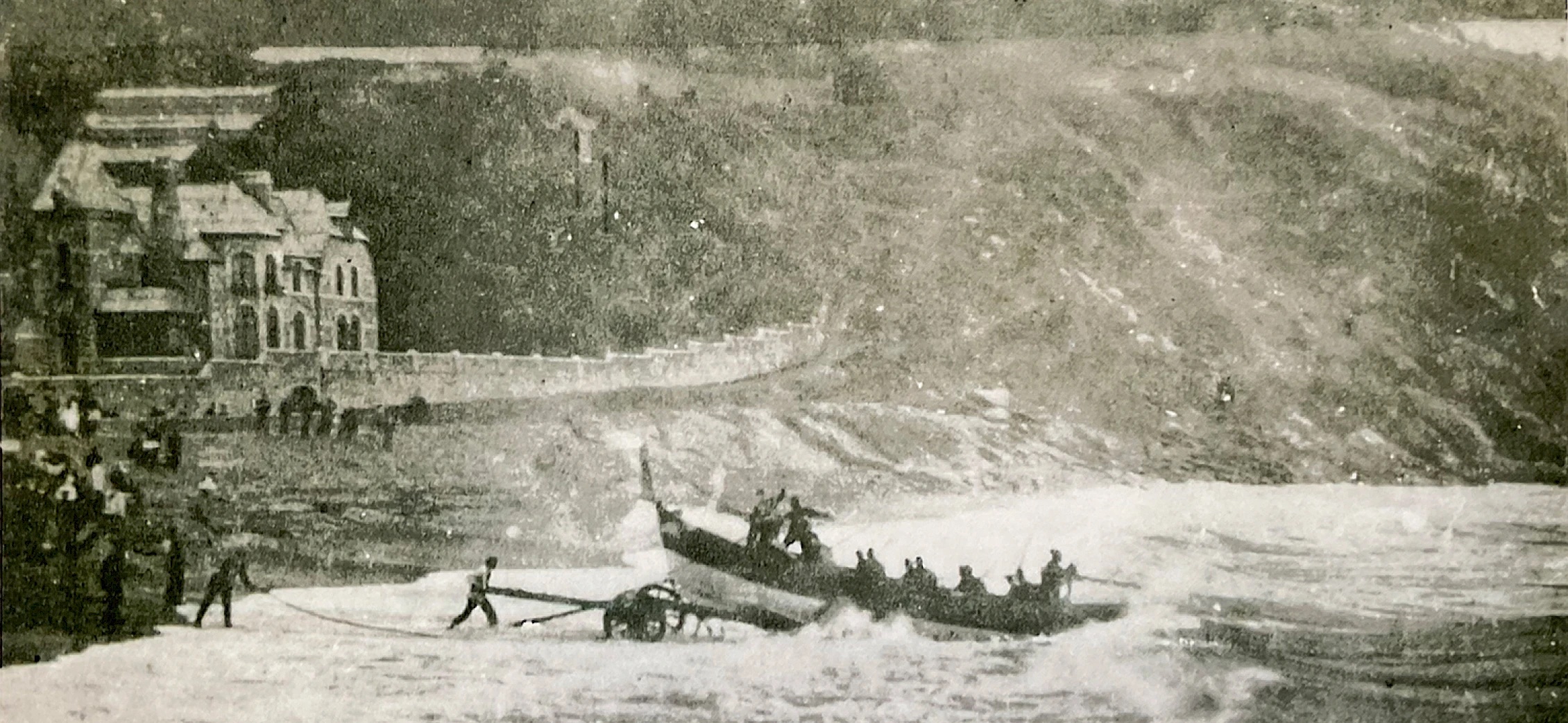
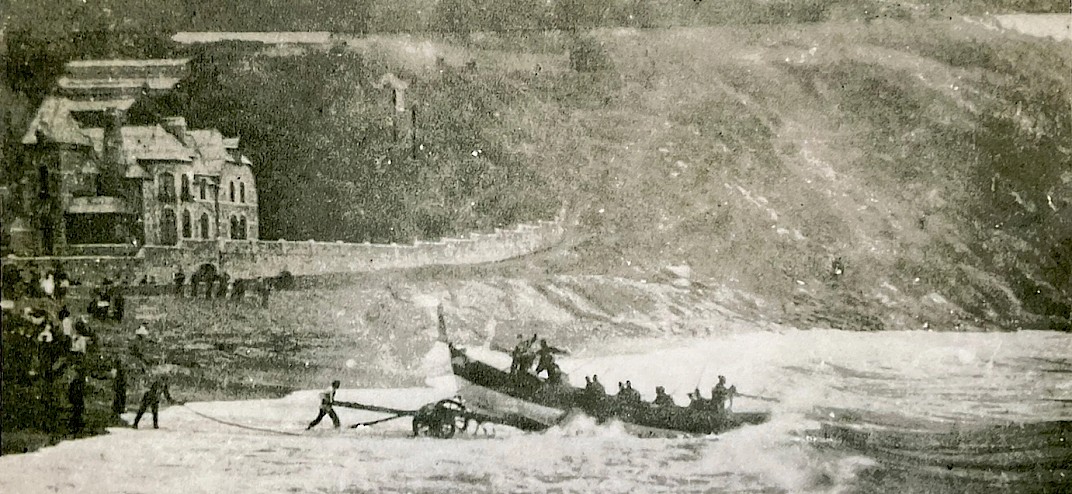
6 Crab Boats - 11 hands - Escorted over the Bar - Launched at 1pm - Reached boats at 1.30pm - Returned to shore at 2.30pm
Crew of 13 received 15/- each. Signalman 3/- 9d. 16 people to launch & haul up lifeboat 3/- 9d. each. 2 Saftsmen received 4/- 3d each. A total of £13 7s 3d. for service.
'Six Crabbers belonging to Looe were brought up off the Harbour, unable to enter, on act. of the heavy Sea on the Bar, as both Wind & Sea were rapidly increasing, it was evident that the Boats would soon be in imminent danger, it was deemed advisable to launch the Life Boat to stand by the boats and if necessary take the Crews off. The Boats were eventually escorted into the Harbour by the Life Boat, which placed herself in such a position as to shelter the small boats on passing through the Surf on the Bar, one Sea did actually broke on Board the Life Boat which would have been fatal to the small boat.'
The Crew
Edward Toms - coxswain
Percy Pearn
Jos. Fletcher
Francis Taylor
Edward Pearn
Stephen Cox
Thomas Stephens
John Little
Thomas Pengelly
Barry Pengelly
Jas. Collins
Edwin Toms
William Pengelly
Red Ensign (February 15th, 1900)
- Submitted by The Old Lifeboat Station Archive - Boy's Own No.1 - Service Report.
- Related mission: RTB.
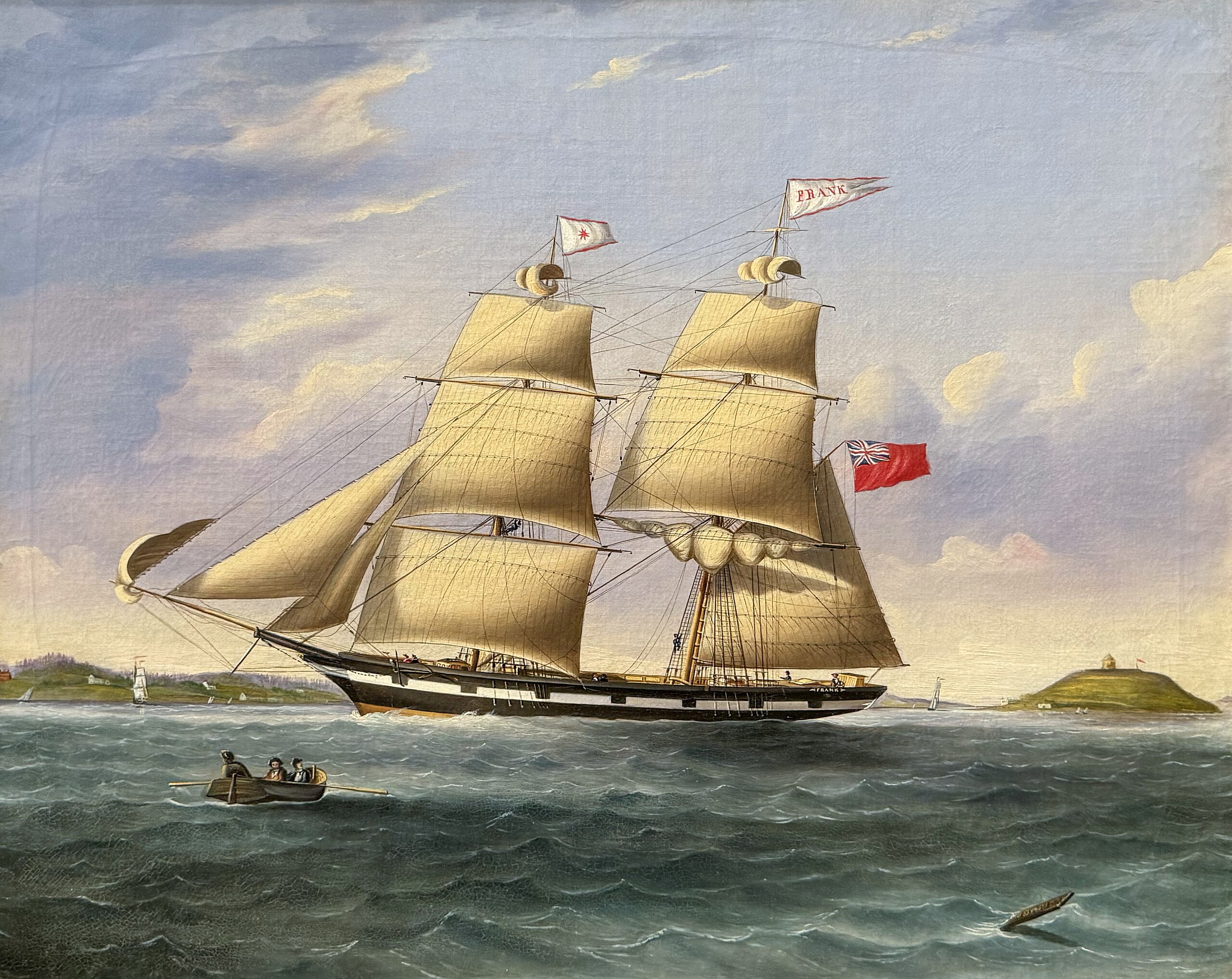
Red Ensign flying - painting "The Frank off George Island' (1856) by marine artist John O'Brien (1831-1891). National Gallery of Canada. Merchant sailing ship portrait painting, with dramatic scenes.
Since the 1700's flying an inverted national ensign, such as the Red Ensign, has traditionally been used as a signal of severe distress.
'At about 5 p.m. a Ketch was observed off the Rennies, about 27 miles from the Harbour flying signal of Distress, viz inverted ensign. The Life Boat was immediately launched over the Slipway. The Master & Crew, consisting of four hands were successfully taken off and brought into Looe.'
The R.T.B, Ketch, 140 tons burthen, 30m long, Crew 4 hands, bound from Plymouth to Cardiff, fully laidened with flour. Ship & Cargo valued at £700. Vessel had lost head gear, stays & sails and was drifting towards a lee shore.
R.T.B - 4 Lives Saved (February 15th, 1900)
- Submitted by The Old Lifeboat Station Archive - Boy's Own No.1 - Service Record and The Life-Boat Journal, 1st August 1900.
- Related mission: RTB.
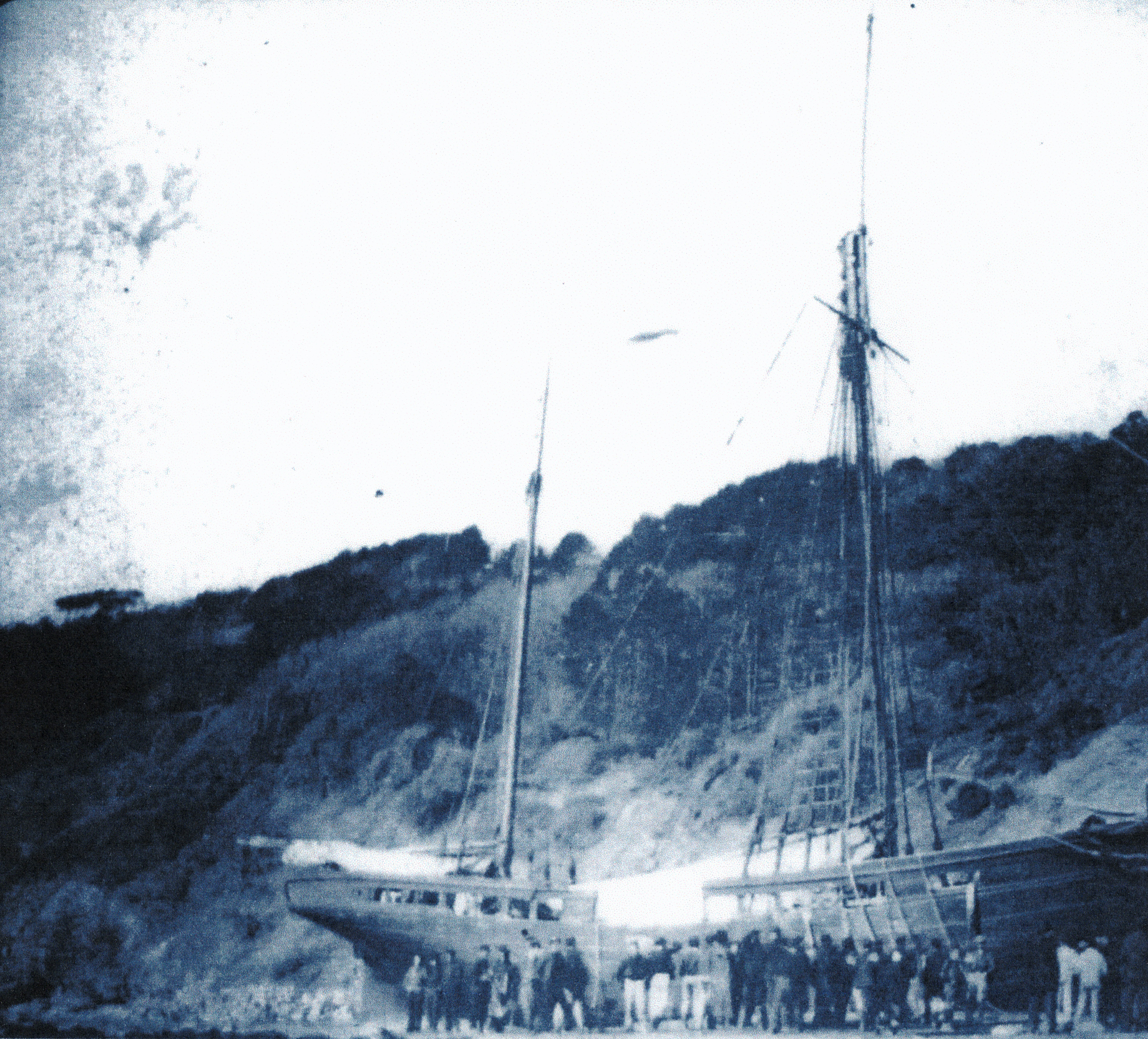
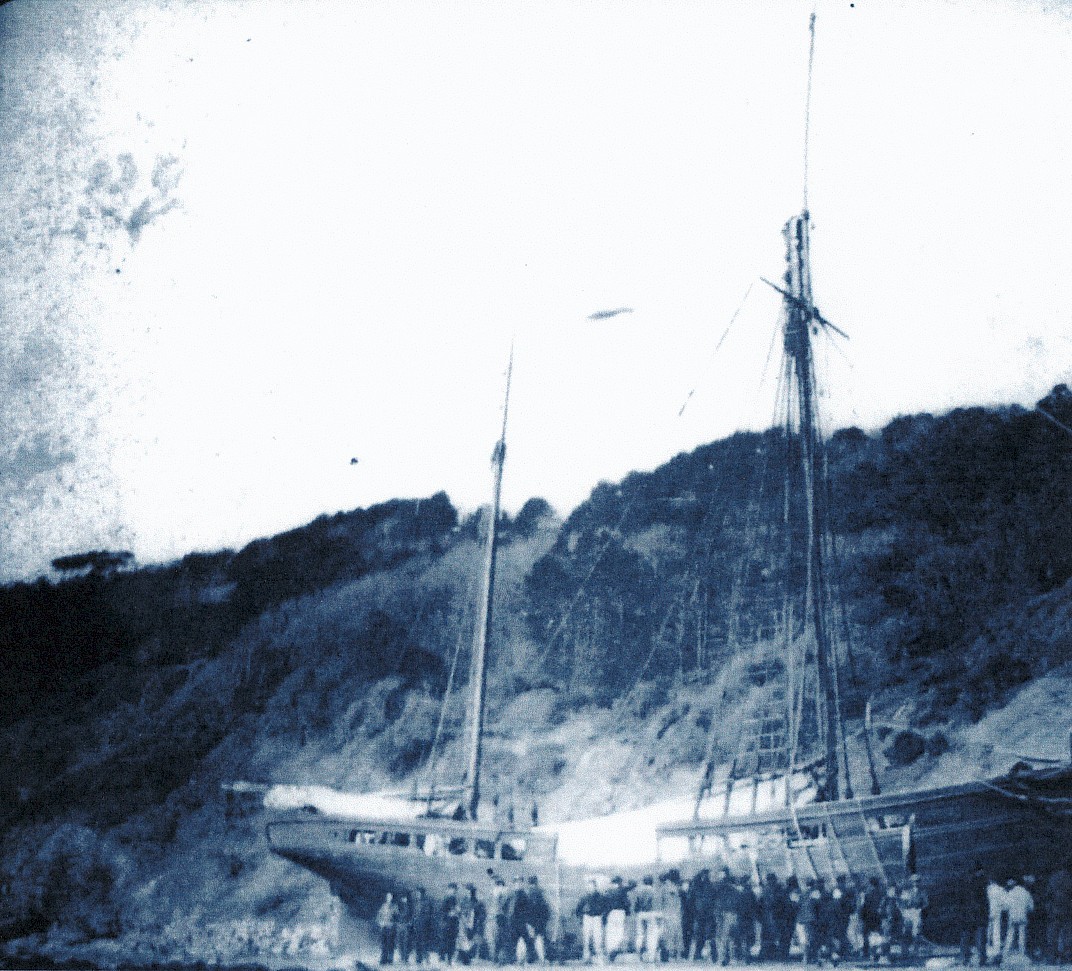
Wreck of the 'R.T.B' driven ashore in a gale at Murrayton - below the Monkey Sanctuary.
'On the 15th February at about 5pm, while a whole gale was blowing from W.S.W., accompanied by a very heavy sea and thick weather with rain, the ketch R.T.B, of Bridgwater, laden with flour from Plymouth for Cardiff, was seen about two miles from the harbour with a signal of distress flying. In about ten minutes the lifeboat Boy's Own No. 1 was launched and proceeded under sail and stays and was drifting towards a lee shore. Her crew of four men were taken into the Lifeboat and safely landed at Looe.'
Boy's Own No. 1 Lifeboat Crew:
Edward Toms - Coxswain
Percy Pearn
Jos. Fletcher
Thomas Toms
Jas. Butters
Walter Toms
Benjamin Pengelly
Francis Taylor
Alfred Bettison
Ernest Bettison
William Butters
Edward F Pearn
Stephen Cox
SS Panama Transport - 6 Lives Saved (February 17th, 1915)
- Submitted by The Old Lifeboat Station Archive - Ryder - Western Evening Herald, 17th & 18th Feb 1915.
- Related mission: Panama Transport.
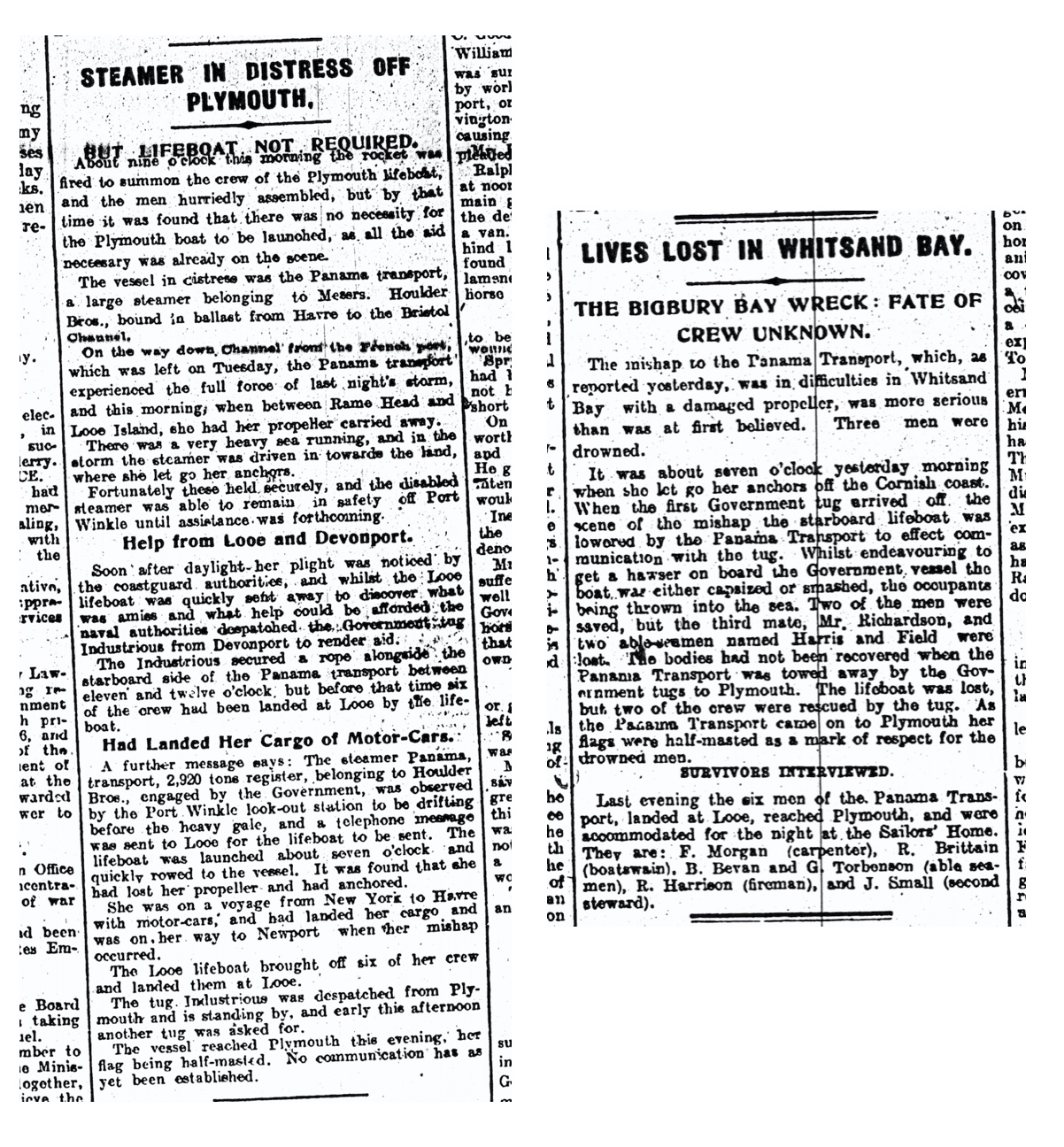
The Western Evening Herald reports the SS Panama Transport on 17 Feb 1915.
The Life-Boat Journal, dated 2 August 1915, also reports:
Looe, Cornwall. --
At 7 A.M. on the 17th February a telephone message was received from Port Wrinkle stating that a large steamer was at anchor six and a half miles of the shore and signals of distress.
A strong S.S.W gale was blowing and the Lifeboat Rider was, with considerable difficulty, launched.
When the Life-boat got close to the steamer she let go her anchor and veered down alongside, when six men of the crew of the vessel immediately jumped into her.
She then had to sheer off on account of the heavy seas, and as the steamer's anchors were holdings the captain requested the Life-boat to return to Looe and wire for tugs to come to his assistance. At 2 P.M., as only one tug had come to the vessel's help the Lifeboat went back to the steamer, accompanying the Steamer until passing the Rame Head.
The Lifeboat Crew of 13 returned safety at 6pm:
1. E. Toms, Service Cox
2. Thos. Toms, 2nd Cox
3. R. Wynhall Bowman
4. Wm. Cox.
5. Chas. Butters
6. Edgar Toms
7. Sam Simons
8. Ben Butters)
9. Alfd Toms)
10. H. Vincent) volunteers
11. Reg. Toms)
12. John Cox )
13. Geo. Sandy
St Pierre - 6 Lives Saved (February 22nd, 1906)
- Submitted by The Old Lifeboat Station Archive - Ryder - Cornish Times, Friday 23rd Feb 1906 - crowds viewed wreck from Hannafore Beach, in Sunday best.
- Related mission: St Pierre.
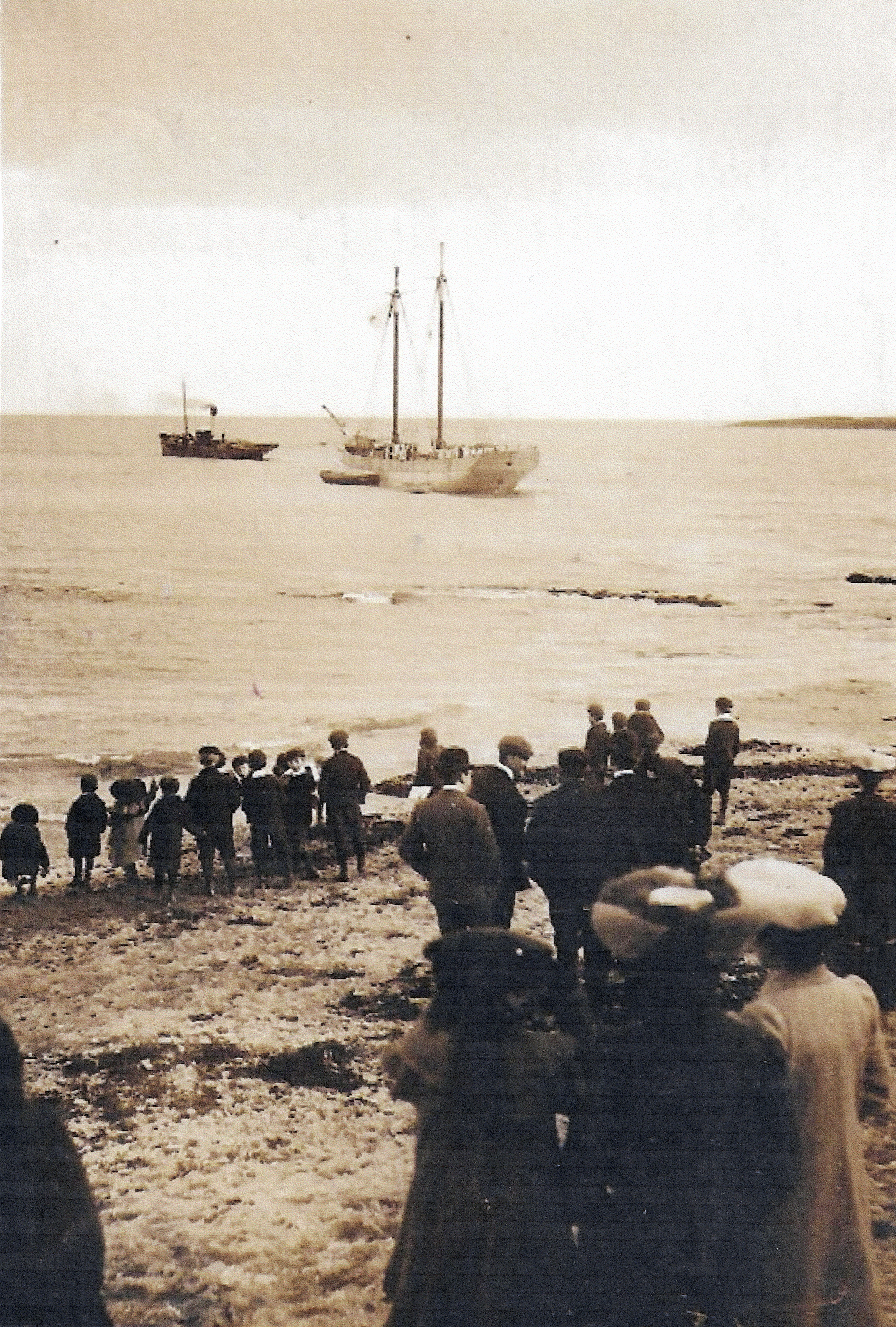
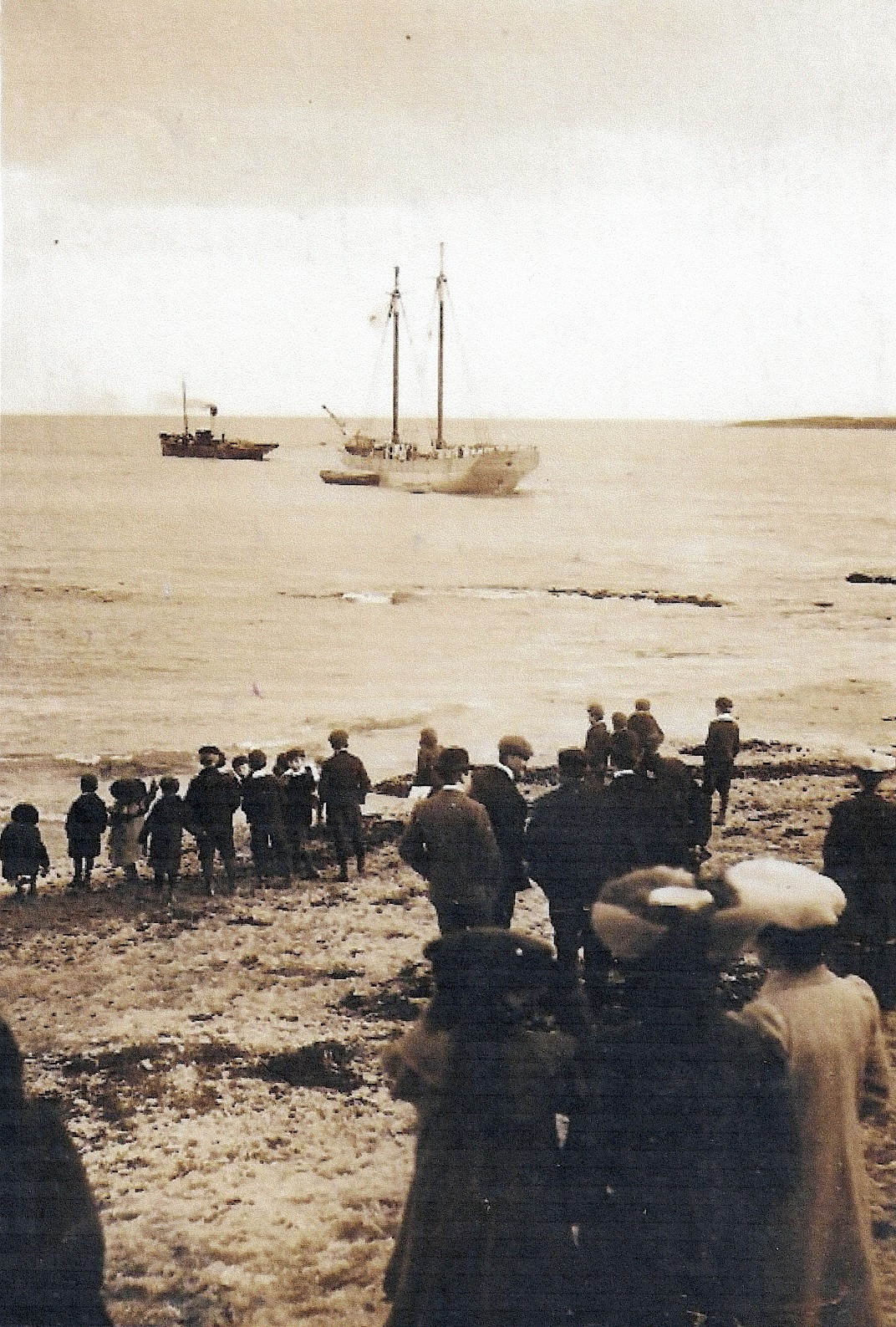
From 1902, when the RNLI's lifeboat 'Ryder: was commissioned for the Looe station, to 1930 when she was retired, Arthur Engelsack, a reporter on the Cornish Times covered every life-saving outing. In her time she saved 37 lives, often in the most perilous conditions; and Engelsack reported it all.
Wreck at Looe
French Schooner Lost - 6 Lives Saved
During the height of the south-easterly gale which swept the Cornish coast yesterday, a large French schooner was driven ashore on a reef of rocks just outside Looe. Thanks to the splendid lifeboat service, all hands, six in number, were saved. It was about 2 O'clock when the coastguard sighted a schooner being driven before the wind and perilously near the rocks. The coastguard, however, thought she would manage to get clear, but she slipped stays (?) and was seen to be gradually going towards the dangerous rocks. The coastguard immediately made the signal for the lifeboat crew and most of the men being near at hand were at the lifeboat house in remarkably quick time. At the time the sea was tremendous and the rain descending in torrents. The coast for miles is of a dangerous character because of the numerous shoals, and the launch of the lifeboat was watched with much anxiety. The brave men of the crew, the coastguard and many willing helpers bravely stuck to their work and after tremendous efforts put forth in remarkably quick time and the boat was successfully got on her way. There was a feeling of relief as Coxswain Toms and his gallant men went away, and an eager crowd watched the schooner in her perilous condition. Her anchors had been let go but she continued to drift. By splendid exertions the lifeboat was got alongside the vessel, which proved to be the St Pierre of Nantes.
She was commanded by Captain Mablo, had a crew of six and was fromCherbourg to Charlestown, in ballast, having taken across to Cherbourg a full cargo of china clay. The whole of the crew were taken off by the lifeboat and landed at Looe at half past three. The crew were loud in their praise of the splendid work of the lifeboat. On board they left all their belongings and in a cold and somewhat exhausted condition they were taken care of by Major H Shapcott, agent of the Shipwrecked Mariners Society. Their immediate cares were taken care of at the Salutation Inn. Later in the afternoon the vessel drifted on to the rocks at Hannafore under the brickworks. She soon became a total wreck, the sea being exceedingly rough and at times going completely over the vessel. The gallant service of the lifeboat crew was the subject of most favourable commendation. An eye-witness stated it was blowing a gale at the time the signal was given. The wind was from the south-east and there was a heavy sea on the beach. Through this the lifeboat was launched and the crew nobly pulled against the sea and wind which were both dead in shore. When the lifeboat had got within a couple of cable lengths to windward of the vessel her anchor was let go and the boat went as near as was safe to the bows of the vessel. At that time the schooner was bumping violently on the rocks and the sea breaking over her. From the lifeboat the lead-line was thrown on the St Pierre and made fast. Then one by one the crew were hauled through the surf and taken into the lifeboat. It appeared from shore that the lifeboat was at times smothered in the sea and every moment it seemed as if it would be dashed against the vessel. The ground where the lifeboat dropped anchor is very rocky and there was the danger of the anchor tripping (?) Had that happened the consequences would have been most serious. The danger, however, had to be faced; there was no other means of getting the crew off. The whole affair was handled in a most seaman-like manner and reflects the greatest credit on the Coxswain and lifeboat crew. The first of the crew to leave the vessel by means of the lifeline was the mate, who, it was noticed, appeared on deck with some of his spare clothing, quickly gathered together under his arms. The line had just been made fast to one of the forward stations (stations?) when he made a jump for it. Instead of grasping the line he missed and plunged into the sea.
Evidently at once understanding his danger he let go his clothing, and struck out for the lifeboat. A huge wave tossed him across the line, which he secured and thus was saved. The boy of the crew had a narrow escape during the course of his perilous transit through the waves. He is not more than fifteen years of age and while in the lifebelt the sea broke over him and tore the belt from his grasp. If he had not clutched the rope he might have gone under. The Captain was the last to leave. A very pathetic incident occurred on board while the work of rescue was proceeding. The Captain had on board the vessel a black French poodle, which had been the joy of the crew. The faithful little animal shivered between the Captain's legs while he waited, the last to quit. When it came to Mablo's turn to pass overboard the dog looked pitifully up in to his master's face and implored in his own canine fashion not to be left to take his own chance of escape. This was too much for the soft-hearted French skipper. He signed and gesticulated his wishes to the lifeboat crew to save his dog as well as himself; and in true French dramatic style they signaled back their acquiescence. "Doggie" was accordingly fastened round the body with a rope and towed to the lifeboat, but not without struggle, for the little animal, in terror of the moment, wanted to swim straight ashore through the terrific surf. The Captain manifested his keen delight that his pet had been rescued. "Oh, le chien fidele! he exclaimed affectionately.
The Ryder Crew numbered 13 - each paid 22/6 shillings; 33 persons assisting launch and haul up were each paid 3/9.
Ed. Toms-Cox.
P. Pearm-2nd Cox
T. Toms-Bowman
Crew
Edward Pearn
Thos. Pengelly
Steven Cox
Charles Hocking
Jas. Toms
Volunteers
John Little
Joe Mitchell
Edward Tamlin,
Ernest Pengelly
Ben Butters